·
Humans of AIspace
106 Stories246 Podcasts
Researchers & Thinkers
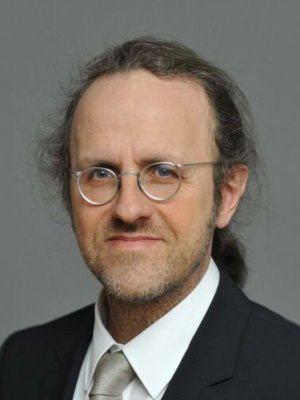
Bernhard Scholkopf
Director, Dept. of Empirical Inference |Max Planck Institute for Intelligent Systems
Pioneer of kernel methods and causal inference in ML. Co-founded ELLIS, leads causal representation learning research, and contributed to exoplanet discovery.
3papers
Research Papers
3 papersBiography
Bernhard Scholkopf is a German computer scientist and director at the Max Planck Institute for Intelligent Systems in Tubingen, where he heads the Department of Empirical Inference. He is a founding Scientific Director of the ELLIS Institute Tubingen, an affiliated professor at ETH Zurich, and an Amazon Distinguished Scholar. A pioneer of kernel methods and support vector machines alongside Vladimir Vapnik, he co-developed kernel PCA, proved the representer theorem for reproducing kernel Hilbert spaces, and co-founded the field of kernel embeddings of distributions. Starting around 2005 he shifted focus to causal inference in machine learning, arguing that the hardest open problems of AI are intrinsically linked to causality. He co-authored the landmark textbook 'Elements of Causal Inference' (MIT Press, 2017) and has introduced the concepts of independent causal mechanisms and sparse mechanism shift. His group has also applied ML to exoplanet discovery, contributing to the detection of K2-18b, the first habitable-zone exoplanet with water vapour in its atmosphere. He is among the most cited computer scientists in the world, with over 200,000 citations on Google Scholar.
Kernel Methods & SVMsCausal Inference in Machine LearningCausal Representation LearningReproducing Kernel Hilbert SpacesTransfer Learning & Domain AdaptationIndependent Causal MechanismsExoplanet Discovery with MLAI Safety & GovernanceStatistical Learning TheoryDimensionality Reduction
Timeline
15 Research15 total
2026
2025
2022
2021
2019
2018
2017
2014
2011
2001
1998
Key Contributions
Kernel PCA & the Kernel Methods Framework
Introduced kernel PCA and proved the representer theorem, showing that SVMs are a special case of a much larger class of algorithms expressible in terms of dot products, all generalizable to nonlinear settings via reproducing kernels. Co-founded the field of kernel methods.
Learning with Kernels (MIT Press, 2002)
Co-authored with Alexander Smola, this textbook became the definitive reference for support vector machines, regularization, and kernel-based learning algorithms. One of the most cited ML books ever written.
Elements of Causal Inference (MIT Press, 2017)
Co-authored with Jonas Peters and Dominik Janzing, this open-access book provides a self-contained introduction to causal inference foundations and learning algorithms, bridging graphical models with modern ML.
Causality for Machine Learning (2019)
Landmark paper arguing that the hard open problems of ML and AI -- including transfer, generalization, and robustness -- are intrinsically related to causality, and introducing the independent causal mechanisms principle.
Towards Causal Representation Learning (2021)
Laid out a research agenda for discovering high-level causal variables from low-level observations, connecting causal inference with representation learning, transfer, and generalization.
Exoplanet Discovery via ML
Applied ML methods to transit photometry data, contributing to the discovery of multiple exoplanets including K2-18b, the first habitable-zone exoplanet found to have water vapour in its atmosphere.
ELLIS (European Laboratory for Learning and Intelligent Systems)
Co-founded and serves as chairman of ELLIS, a pan-European network of AI research labs aiming to ensure Europe remains competitive in fundamental AI research and attracts world-class talent.
Notable Quotes
“
We are extremely far away from a machine being more intelligent than a human being.
“
The hard open problems of machine learning and AI are intrinsically related to causality.
“
Current models and the field of representation learning mostly represent statistical dependences. Thinking would require models that also tell us about the effect of our actions or interventions in the world -- i.e., world models.
15 sources(click to expand)
Bernhard Scholkopf - WikipediaBernhard Scholkopf | Empirical Inference - MPI-ISBernhard Scholkopf - ACM AwardsBernhard Scholkopf - BBVA Frontiers of Knowledge AwardBernhard Scholkopf wins German AI Innovation Award - Amazon ScienceELLIS Institute TubingenBernhard Scholkopf on AI Systems That Understand the World - EE TimesCausality for Machine Learning (arXiv:1911.10500)Towards Causal Representation Learning (arXiv:2102.11107)Elements of Causal Inference - MIT PressLearning with Kernels - MIT PressBernhard Scholkopf elected for UN AI Scientific Panel - MPI-ISELLIS Institute PIs contribute to the International AI Safety Report 2026Bernhard Scholkopf receives ACM-AAAI Allen Newell Award - IMPRS-ISResearch.com - Bernhard Scholkopf Academic Profile
Research generated March 19, 2026
Researchers & Thinkers/Bernhard Scholkopf
All Profiles